
LIsa Black
Cape Coral, FL
Female, 49


I spent the five happiest years of my life in a morgue. As a forensic scientist in the Cleveland coroner’s office I analyzed gunshot residue on hands and clothing, hairs, fibers, paint, glass, DNA, blood and many other forms of trace evidence, as well as crime scenes. Now I'm a certified latent print examiner and CSI for a police department in Florida. I also write a series of forensic suspense novels, turning the day job into fiction. My books have been translated into six languages.
No and no, I’m afraid. That’s more a question for a pathologist.
Share Answer: 

I actually haven’t seen that movie. Do you mean super bloody homicides or ones where some psycho has set up a torture chamber? (The answers would be yes to the former, no to the latter.)
Share Answer: 
I would major in biochemistry for either, and/or genetics for DNA. Best of luck!!
Share Answer: 
Like any job it gets easier the more you are accustomed and practiced in what you’re doing. I have no idea what kind of IQ you need, and it depends on what you want to do. If you want to analyze DNA you may need a PhD in genetics. But to work crime scene you need only be conscientious, reliable, observant, and willing to learn. Best of luck!
Share Answer: 
Investment Banker
 What's the craziest partying you've ever seen among bankers?
SWAT Team Commander (Retired)
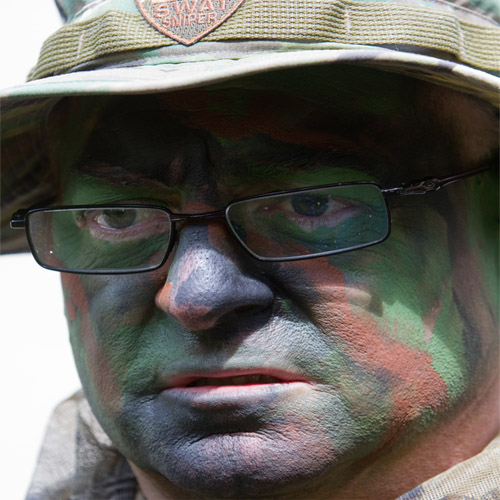 How do you decide whether to try and kill a hostage taker?
Flight Attendant
 What kinds of passengers annoy you the most?
I don't see why not!
Best of luck.
Share Answer: 
1. Probably not in a forensics lab. I'm guessing that would require carbon dating; an archaeologist would know much more than I would. 2. Possibly.3. Depends on the backlog at the lab (could be weeks, could be many months) and how much you're willing to pay for rush work at a private lab.4. I'm not sure news releases are ever required for anything, unless there's some sort of imminent threat to the public. Sorry but I actually don't know how our public information officer decides when to issue a release or not. 5. News reporters usually come to the scene of a crime or accident when they see something going on, but it depends on how busy they are, who they can spare to go to the scene, and whether they guess this will be a useful story to them. It's entirely up to them. We have a public information officer that they can always contact to get any release-able information.
Share Answer: 
Again, titles and job requirements aren't uniform, so the only way to know is to call the crime labs in your area or whereever you might be interested in working and ask them. At the coroner's office we had to have at least a bachelor's in a natural science (this was before they had forensic science majors). At the police department where I am now, they only require a high school diploma but you get more points in the interviewing process for having a four year degree, so we all have one. You can also go on the websites for professional organizations such as the American Academy of Forensic Sciences and check out their job vacancy postings and see what the various positions require. Good luck.
Share Answer: 
-OR-
 Login with Facebook
 (max 20 characters - letters, numbers, and underscores only. Note that your username is private, and you have the option to choose an alias when asking questions or hosting a Q&A.)
(A valid e-mail address is required. Your e-mail will not be shared with anyone.)
(min 5 characters)
By checking this box, you acknowledge that you have read and agree to Jobstr.com’s Terms and Privacy Policy.
-OR-
Register with Facebook(Don't worry: you'll be able to choose an alias when asking questions or hosting a Q&A.)



 Browse Jobs
 Host a Q&A
 Search

 Submit Your Question
 Host a Q&A
 Last 7

