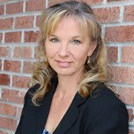
LIsa Black
Cape Coral, FL
Female, 49


I spent the five happiest years of my life in a morgue. As a forensic scientist in the Cleveland coroner’s office I analyzed gunshot residue on hands and clothing, hairs, fibers, paint, glass, DNA, blood and many other forms of trace evidence, as well as crime scenes. Now I'm a certified latent print examiner and CSI for a police department in Florida. I also write a series of forensic suspense novels, turning the day job into fiction. My books have been translated into six languages.
As I'm not trained in digital forensics, I'm afraid I wouldn't know. PS the purpose of this website is not really so that you can cut and paste your homework and get other people to do it for you.
Share Answer: 

That depends on what you want to do. Call labs that you're interested in working for or peruse job opportunities postings at the major forensic organizations websites and see what they require.
Share Answer: 
They might. I couldn't say for sure one way or the other.
Share Answer: 
First of all, no teacher should ever tell you you're 'not smart enough' for a field.
Second, not all forensic work involves a great deal of biology--really only DNA analysis and serology do. Toxicology will require a good chemistry background. But specialized fields such as latent prints, crime scene investigator, questioned documents, digital evidence, ballistics and impression evidence would use little to no biology.
If a formal degree becomes a problem, you might want to see if you can start out in an Evidence/Property area and work up from there.
Best of luck!
Share Answer: 
Professional Reseller
 What kind of mark-ups can you fetch on the clothing you resell from thrift stores?
Private Detective
 Have you ever turned down a job because you thought it was too dangerous?
Dry Cleaner
 What happens to clothing at dry cleaners that goes unclaimed?
I have no idea. It could be either. It doesn't matter how many times they were shot. As far as I know it would only matter if their eyes were open or not at the moment they died, not what happened before or after they died.
Share Answer: 
The vast, vast majority of people who kill people didn't plan to kill someone, so they often leave fingerprints, blood, witnesses, text messages, and then come up with some sort of story that sounded good in their head but wouldn't fool a 6 year old.
Share Answer: 
I use it the way you use your computer without writing code. I have chemicals that I use to process for prints, but we just purchase them. There are a few reagents we mix ourselves. At the coroners office we mixed almost all ourselves. A toxicologist, on the other hand, would use it every day.
Share Answer: 
-OR-
 Login with Facebook
 (max 20 characters - letters, numbers, and underscores only. Note that your username is private, and you have the option to choose an alias when asking questions or hosting a Q&A.)
(A valid e-mail address is required. Your e-mail will not be shared with anyone.)
(min 5 characters)
By checking this box, you acknowledge that you have read and agree to Jobstr.com’s Terms and Privacy Policy.
-OR-
Register with Facebook(Don't worry: you'll be able to choose an alias when asking questions or hosting a Q&A.)



 Browse Jobs
 Host a Q&A
 Search

 Submit Your Question
 Host a Q&A
 Last 7

