
LIsa Black
Cape Coral, FL
Female, 49


I spent the five happiest years of my life in a morgue. As a forensic scientist in the Cleveland coroner’s office I analyzed gunshot residue on hands and clothing, hairs, fibers, paint, glass, DNA, blood and many other forms of trace evidence, as well as crime scenes. Now I'm a certified latent print examiner and CSI for a police department in Florida. I also write a series of forensic suspense novels, turning the day job into fiction. My books have been translated into six languages.
Not that I'm aware of. Are you sure they were destroyed? Or simply not located at that office?
Share Answer: 

I'm sorry but I wouldn't have any idea. They didn't even have forensic science degrees when I went to school.
Share Answer: 
Gunshot residue can actually refer to two things, gunpowder that flies out of the barrel with the bullet and can land on the victim, and primer residue that can leak out of the back of the bullet cartridge and spray out onto the shooter's hand. But it can also get on the gun or nearby surfaces or people so presence of it on hands does not prove someone fired a gun, and it can wipe off easily so absence of it doesn't prove they did.
Share Answer: 
Get everybody out of it, and then take pictures.
Share Answer: 
Professor
 Are professors really subject to the "Publish or Perish" policy?
Toll Collector
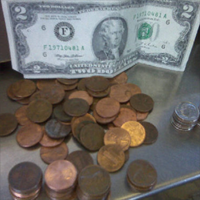 Do you think there will be a time where all tolls are automated?
Bracketologist
 Why have there been so many 15-2 upsets, but no 16-1's?
At it’s most basic, a trajectory is just geometry. If you can find two fixed points then you can draw a straight line between and beyond them.
Share Answer: 
Usually, as far as I know, the detective is in charge of the investigation. The CSI doens’t work for them but is there to provide technical support and advice, but ultimately, the detective has the final say. And unlike TV, the detectives are interviewing witnesses and deciding who to arrest. Best of luck!
Share Answer: 
A 'forensic science technician' can refer to anything from someone who works in the Property Department to someone who does DNA analysis to someone who investigates death scenes. A good way to get a handle on the situation is to look at online job postings from places where you might want to work--the local police department, the county morgue, the state crime lab. They will post the duties and requirements for each position. You can also check the same information on the websites of professional organizations such as the American Academy of Forensic Sciences or the International Association for Identification. That should give you a good start.
Share Answer: 
-OR-
 Login with Facebook
 (max 20 characters - letters, numbers, and underscores only. Note that your username is private, and you have the option to choose an alias when asking questions or hosting a Q&A.)
(A valid e-mail address is required. Your e-mail will not be shared with anyone.)
(min 5 characters)
By checking this box, you acknowledge that you have read and agree to Jobstr.com’s Terms and Privacy Policy.
-OR-
Register with Facebook(Don't worry: you'll be able to choose an alias when asking questions or hosting a Q&A.)



 Browse Jobs
 Host a Q&A
 Search

 Submit Your Question
 Host a Q&A
 Last 7

